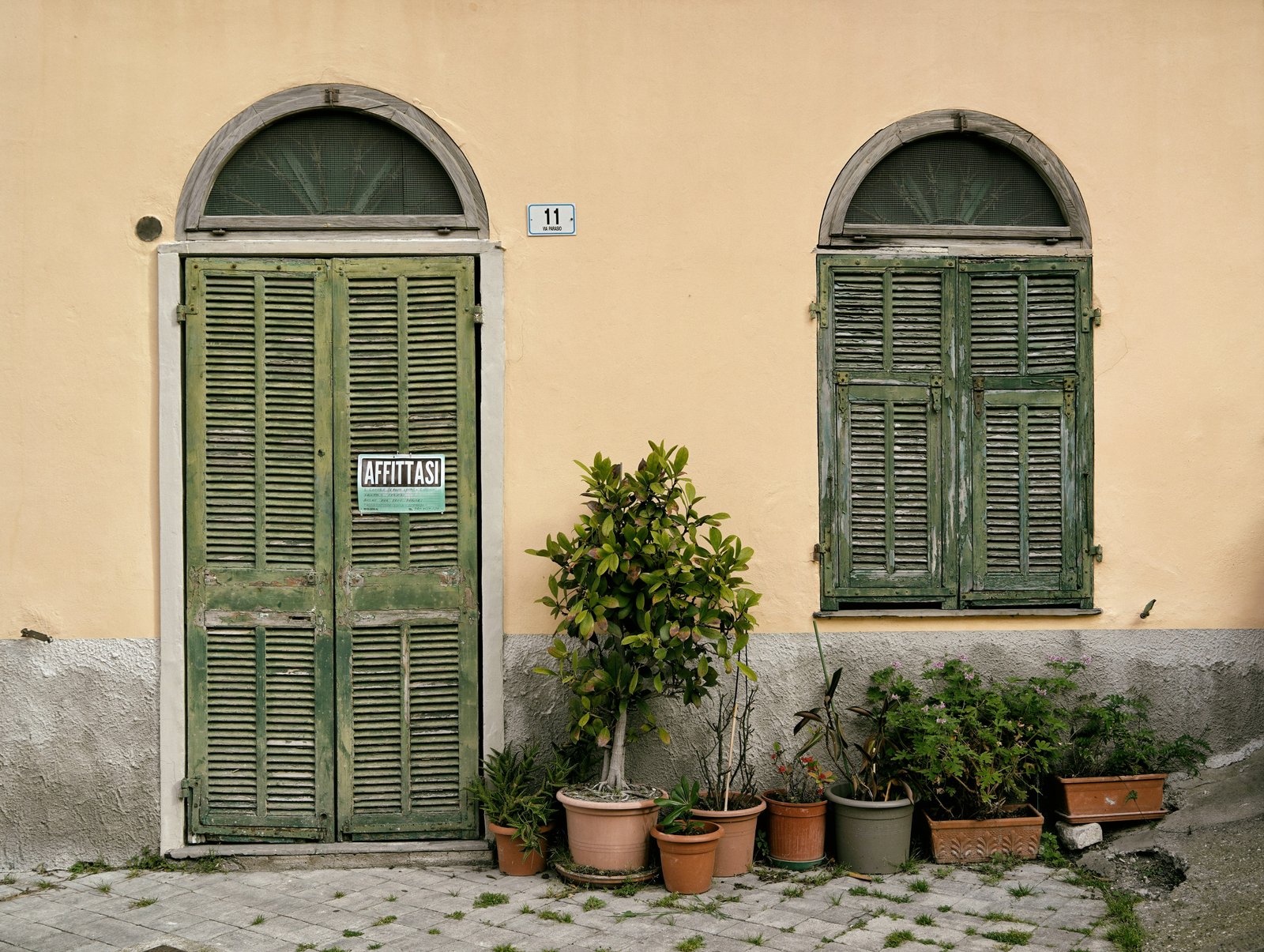
Italian tenancy and lease law distinguishes between residential tenancy agreements (locazione ad uso abitativo), commercial lease agreements (locazione ad uso commerciale) and business leases (contratti di affitto di azienda). Residential tenancy agreements are subject to specific requirements regarding duration, notice periods and maintenance obligations. Commercial lease agreements offer greater contractual flexibility.
The main residential tenancy models under Law 431/1998 are:
- Free-market contract (contratto a canone libero): 4-year term, automatically renewable for a further 4 years; rent is freely negotiated; landlord may refuse renewal only on specific statutory grounds (own use, redevelopment etc.); registration with the Agenzia delle Entrate is mandatory within 30 days of signing
- Agreed-rent contract (contratto a canone concordato): 3+2 years; rent capped by local authority agreements between landlord and tenant associations; reduced registration tax and income tax rates available; suitable for urban areas with high rental demand
- Transitional contract (contratto transitorio): 1 to 18 months; for documented temporary needs of the tenant or landlord; rent at agreed levels; may not be used to circumvent standard 4+4 provisions
- Student contract (contratto per studenti universitari): 6 to 36 months; available in university towns; specific documentary requirements for eligibility
All residential tenancy agreements must be registered. Failure to register renders the contract void and exposes the landlord to penalties. Registration also triggers the tenant's right to opt for the cedolare secca regime (see Tax Aspects tab).
Regular holiday rentals or listings on digital platforms require registration with the municipality and a Codice Identificativo Regionale (CIR) or Codice Identificativo Nazionale (CIN). Violations can be sanctioned with substantial fines.
Additional requirements include police registration of guests (alloggiati web) as well as safety and hygiene standards. Rental income is subject to Italian income tax; foreign owners must additionally observe their obligations in their country of residence.
The regulatory framework for short-term and holiday lettings in Italy has been substantially tightened in recent years:
- National identification code (CIN): since 2 November 2024, all short-term rentals (affitti brevi) and tourist accommodation require a CIN issued by the Ministry of Tourism; the CIN must appear in all online listings and at the property entrance; fines of up to €8,000 apply for non-compliance
- Regional identification code (CIR): several regions (including Lombardy, Veneto, Tuscany) have their own regional registration systems; the CIR must be obtained separately and displayed alongside the CIN
- Police registration (alloggiati web): within 24 hours of the guest's arrival (or before midnight if the guest arrives after 6 pm), the landlord must transmit guest data to the Questura via the alloggiati web portal; this obligation applies even for single-night stays
- Tourist tax (tassa di soggiorno): most tourist municipalities levy a tourist tax per person per night; the landlord collects it from guests and remits it to the municipality; failure to remit exposes the landlord to surcharges and interest
- Safety requirements: smoke detectors, carbon monoxide detectors and a fire extinguisher are mandatory; properties must comply with safety standards for electrical and gas installations
- Platform withholding: since 2024, digital platforms (Airbnb, Booking.com etc.) are required to withhold and remit to the Italian tax authority the flat-rate tax (cedolare secca) on rental income derived by individuals who are not operating as a business
In the commercial sector, freedom of contract is considerably more extensive. Careful contract drafting protects the interests of both parties. Relevant provisions concern fit-out and use obligations as well as liability, warranty and reinstatement obligations.
Italian commercial leases are governed by Law 392/1978 and are characterised by the following features that differ significantly from German and Swiss commercial tenancy law:
- Mandatory minimum terms: the standard commercial lease has a minimum term of 6 years (automatically renewed for a further 6 years); hotel, tourist and entertainment activities enjoy a minimum of 9+9 years; the parties may agree longer terms but not shorter ones
- Tenant's right of first refusal (prelazione): the tenant has a statutory right of first refusal if the landlord decides to sell; this right must be properly waived or exercised in writing; a sale without observing this right entitles the tenant to substitute for the buyer at the same price
- Goodwill indemnity (indennità di avviamento): upon termination or non-renewal of a commercial lease by the landlord, the tenant is entitled to a goodwill indemnity of 18 months' rent (36 months for hotels and similar); this obligation cannot be contractually excluded and must be factored into the investment analysis
- Rent indexation: rent may be indexed to ISTAT, but only up to the limit prescribed by law; higher contractual indexation clauses are partially null
- Use clause: the permitted use must be precisely defined in the contract; a change of use requires the landlord's consent and may require new planning permissions; the tenant's goodwill indemnity entitlement depends on the activity actually carried on
Business leases (contratti di affitto di azienda) – where the entire business operation (equipment, clientele, licences) is let together with the premises – are governed by different rules and require specific legal structuring, in particular regarding the allocation of business liabilities and the treatment of employment contracts.
Income from rentals is in principle subject to Italian income tax (IRPEF). For residential tenancy agreements the cedolare secca is available as a flat withholding tax. The tax treatment is closely linked to the civil law classification of the contract. I work together with qualified tax advisers.
The main tax regimes for rental income in Italy are:
- IRPEF with deductions: rental income is included in the owner's taxable income and taxed at progressive rates (23%–43%); deductible expenses include maintenance costs (up to a flat deduction of 5% of gross rent for residential leases), mortgage interest and IMU (in certain cases); this regime applies automatically unless the owner opts for cedolare secca
- Cedolare secca (residential): a substitute flat tax replacing IRPEF, regional and municipal surcharges, and stamp duty on the lease; rate: 21% for free-market contracts; 10% for agreed-rent contracts (canone concordato); available only to natural persons letting residential property in their private capacity (not as a business); the tenant must be notified of the election and may not have business purposes
- Cedolare secca (short-term / holiday): since 2024, the rate is 21% for the first property and 26% from the second property onwards; digital platforms are required to withhold the tax at source; foreign owners without a fiscal representative in Italy must register directly with the Italian tax authority
- Double taxation agreement: under the Germany-Italy DTA, rental income from Italian property is taxed in Italy; Germany exempts the income from German tax but takes it into account for the progression clause (Progressionsvorbehalt); similar rules apply under the Switzerland-Italy and Austria-Italy DTAs
- IMU on let properties: properties let for residential purposes are fully subject to IMU (the primary residence exemption does not apply to let properties); the IMU rate is set by each municipality within the limits prescribed by national law; IMU is self-assessed and paid in two instalments (16 June / 16 December)
- VAT (IVA): short-term residential lettings are VAT-exempt by default; commercial lettings are generally VAT-exempt but may be subject to IVA at 22% if the landlord opts for IVA treatment; this option can be commercially advantageous where the landlord has significant input VAT to recover on fit-out works